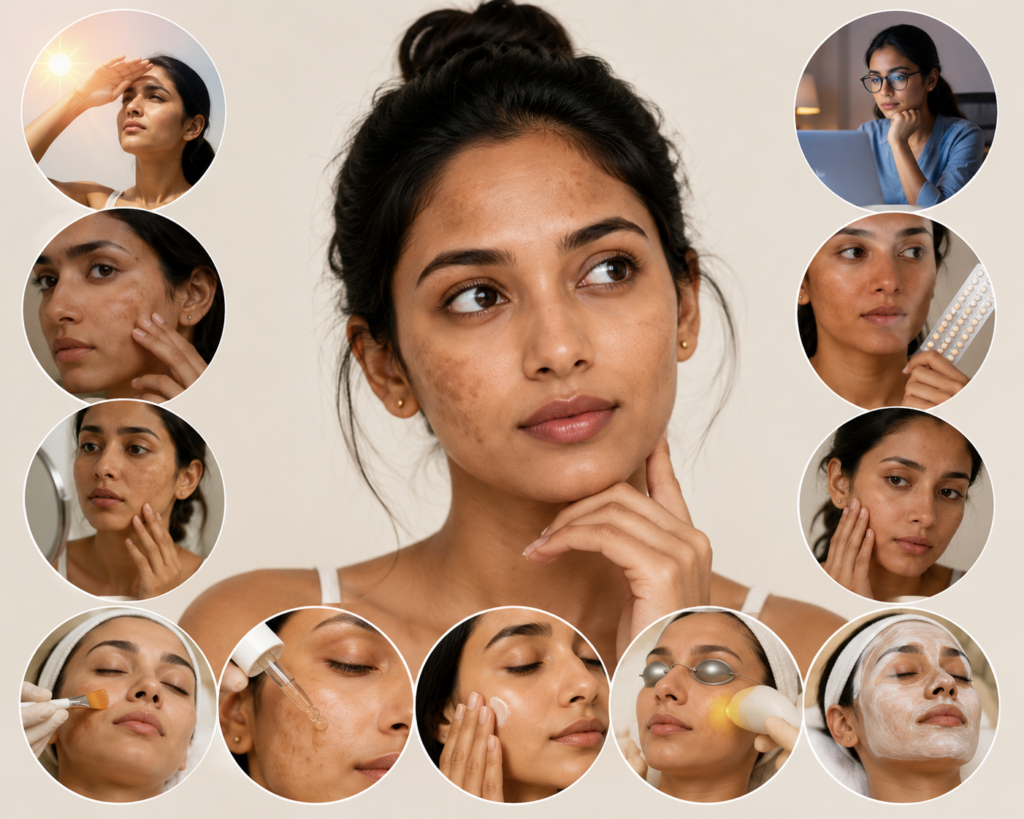
Top 7 Causes of Pigmentation in Indian Skin & How to Treat It
Pigmentation is one of the most common skin concerns in India. From dark spots and uneven skin tone to stubborn patches, it can affect both your appearance and confidence. Because Indian skin has higher melanin levels, it is naturally more prone to pigmentation—especially when exposed to certain triggers.
The good news is that once you understand the root cause, managing and treating pigmentation becomes much easier. Let’s break down the main reasons behind pigmentation in Indian skin and how you can deal with it effectively.
Understanding Pigmentation in Indian Skin
Pigmentation happens when the skin produces excess melanin—the pigment responsible for your skin color. While melanin helps protect your skin from sun damage, too much of it can lead to dark patches and uneven tone.
Indian skin, which usually falls in medium to deeper tones, tends to react quickly to triggers like sunlight, acne, and irritation. That’s why prevention and the right treatment approach are very important.
- Sun Exposure
The Biggest Trigger for Pigmentation
Spending long hours in the sun without protection is one of the main causes of pigmentation. UV rays stimulate melanin production, leading to tanning, sunspots, and patchy skin.
What You Can Do
Using a broad-spectrum sunscreen (SPF 30 or higher) daily is a must—even when it’s cloudy. Reapply every few hours if you’re outdoors. Treatments like skin brightening facials or laser procedures can also help reduce sun damage over time.
- Hormonal Changes (Melasma)
When Hormones Affect Your Skin
Hormonal fluctuations—especially during pregnancy or due to certain medications—can cause melasma. This usually appears as dark patches on the cheeks, forehead, or upper lip.
Treatment Approach
Melasma requires patience. A mix of topical treatments, chemical peels, and professional care can help lighten the patches gradually. Consistent sun protection is essential to prevent it from coming back.
- Acne & Post-Inflammatory Hyperpigmentation
Marks That Stay After Pimples
After acne heals, it often leaves behind dark spots, known as post-inflammatory hyperpigmentation (PIH). This is very common in Indian skin.
How to Treat It
The best way is to control acne early. For existing marks, treatments like chemical peels, HydraFacial, and targeted serums can help fade spots and improve overall skin clarity.
- Pollution & Environmental Damage
The Hidden Urban Factor
Daily exposure to dust, pollution, and toxins can weaken your skin barrier. This leads to inflammation, which can trigger pigmentation over time.
How to Protect Your Skin
Follow a good skincare routine that includes proper cleansing and antioxidant-based products. Regular facials and professional treatments can help detoxify and refresh your skin.
- Aging & Long-Term Sun Damage
Slow Changes Over Time
As you age, your skin’s ability to renew itself slows down. Combined with years of sun exposure, this can result in dark spots and uneven tone.
What Helps
Regular exfoliation, anti-aging treatments, and chemical peels can improve skin texture and reduce pigmentation. Consistent skincare plays a big role in maintaining results.
- Genetics
When It Runs in the Family
Some people are naturally more prone to pigmentation due to their genetic makeup. If your family has a history of melasma or uneven skin tone, you might experience similar concerns.
Managing It
While you can’t change genetics, you can control how your skin responds. Preventive care, sunscreen, and customized treatments can make a big difference.
- Incorrect Skincare & Harsh Products
A Common but Overlooked Cause
Using the wrong products or over-exfoliating can damage your skin barrier. This can lead to irritation, which often results in pigmentation.
The Right Way
Stick to a gentle skincare routine that suits your skin type. Avoid experimenting too much, and consult a professional before trying new treatments.
Best Treatments for Pigmentation in Indian Skin
Today, there are several effective treatments available:
- Chemical peels help remove dead skin and lighten dark spots
- HydraFacial improves hydration and overall skin tone
- Laser treatments target deeper pigmentation and offer long-term results
Often, combining treatments along with medical-grade skincare gives the best outcome.
Why Expert Consultation Matters
Pigmentation is different for everyone. What works for one person may not work for another—and in some cases, the wrong treatment can make it worse.
That’s why it’s always best to consult a qualified cosmetologist who can assess your skin and suggest a personalized plan.
Conclusion
Pigmentation is a common concern in Indian skin, but it is definitely manageable with the right approach. Whether it’s caused by sun exposure, hormones, acne, or lifestyle factors, identifying the cause is the first step toward effective treatment.
With proper skincare, regular sun protection, and expert guidance, achieving clear and even-toned skin is absolutely possible.
For advanced pigmentation treatments and personalized skincare solutions, you can visit:
VLCC Salon & Cosmetology Clinic
Address: Shop no.1, Gyanbodh Heights, Kaspate Wasti, Wakad, Pune, Pimpri-Chinchwad, Maharashtra 411057
Phone: + 909309007299
Book your consultation today and take the first step toward healthy, radiant, and clearer skin. ✨
Recent Posts
-
 Why Investing in Yourself Is the One Thing Beauty Can Never Take Away
 -
 The Cosmetic Gamble: Why “Home Peels” Are a High-Stakes Risk to Your Skin’s Integrity
 -
 Is Laser Hair Reduction Really Permanent, or Is the Promise Bigger Than the Reality?
 -
 One Week Before the Wedding, Brides Make a Beauty Mistake They Often Regret Later.
 -
 Your Hair May Look Thin Even If You’re Using the “Best” Products. Here’s the Hidden Reason.